HGH
Aeterna does not sell peptides. External link, vendor independently verified.
Mechanism
Human growth hormone does not act in isolation. It initiates a cascade – binding its receptor, triggering downstream mediators, and ultimately influencing nearly every tissue in the body. Understanding that cascade is the prerequisite for understanding both its therapeutic promise and its risks.
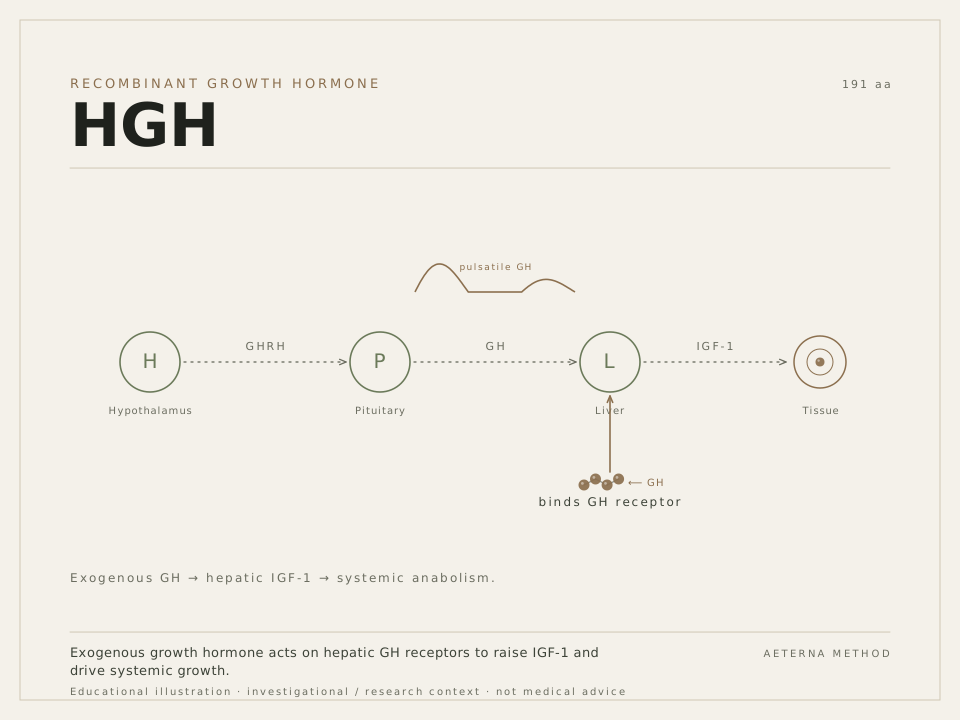
Growth hormone binds its receptor, dimerizes two monomers, and activates JAK2 to initiate phosphorylation of intracellular tyrosines. This is the canonical somatotropic signal from which all downstream effects originate.
Hepatic GHR activation drives IGF-1 secretion, which engages IGF-1R in muscle, bone, and connective tissue to activate PI3K/Akt/mTOR. IGF-1 mediates the majority of HGH’s anabolic effects on lean tissue.
STAT5b is the principal transcription factor downstream of JAK2, regulating IGF-1 expression, acid-labile subunit synthesis, and broader metabolic gene programs. Phosphorylated STAT5b dimers translocate to the nucleus to execute that program.
Independent of IGF-1, HGH activates hormone-sensitive lipase in adipocytes to mobilize free fatty acids from visceral and subcutaneous depots. Concurrent insulin antagonism in the liver and periphery shifts substrate utilization toward fat oxidation.
What we observe
Results tied to body changes
The observations below are drawn from peer-reviewed clinical and translational research. They describe patterns reported in studied populations and do not constitute predictions for any individual. Aeterna does not prescribe, dispense, or sell. These entries are educational in nature.
01
Lean Mass Accretion
02
Reduction in Visceral Adiposity
03
Bone Mineral Density
04
Connective Tissue and Wound Repair
05
Exercise Capacity and Recovery
06
Lipid Profile Modulation
Evidence
Trials and long-term data
Seven decades of investigation have produced a substantial but uneven evidence base. The strongest data concern GH deficiency in adults and children; evidence for anti-aging and performance applications remains methodologically limited. Readers are encouraged to consult primary sources directly.
Body Composition and Metabolic Effects of Growth Hormone Replacement in Adult GH Deficiency: A 24-Month Randomized Controlled Trial
Adults with confirmed GH deficiency randomized to recombinant HGH replacement demonstrated significant reductions in fat mass and increases in lean body mass compared to placebo. Fasting lipid profiles improved, and quality-of-life scores were meaningfully higher in the treatment arm at 24 months.
Effects of Human Growth Hormone in Men over 60 Years Old
Rudman et al. reported that GH administration in older men without documented deficiency increased lean mass and reduced fat mass over six months. The study was widely cited in anti-aging contexts, though subsequent analyses noted significant adverse effects – including fluid retention, carpal tunnel syndrome, and glucose intolerance – and cautioned against extrapolation to healthy aging populations.
Systematic Review: The Effects of Growth Hormone on Athletic Performance
A Cochrane-style systematic review of GH administration in recreational and competitive athletes found no significant improvement in strength or aerobic capacity despite increases in lean mass. The authors concluded that lean mass gains reflected fluid and connective tissue accretion rather than functional muscle hypertrophy, and that the risk-benefit profile did not support use in GH-sufficient individuals.
From lyophilized powder to a usable solution.
Peptide
10 IU lyophilized powder
Diluent
3.0 mL bacteriostatic water
Final concentration
1.11 mg/mL
01

Prepare the vial
02

Draw the diluent
03

Add slowly
04

Prepare the vial
Note
Dosing rythm
A patient titration
Schedule below mirrors the peptidedosages.com educational protocol (typical daily range: 150–500 mcg (conservative replacement protocols) [1] to 1000–2000 mcg (advanced metabolic studies) [4] ).
Storage, caution, contradiction
Storage
Cold, dark, undisturbed
- Lyophilized: freeze at −20 °C (−4 °F).
- After reconstitution, refrigerate at 2–8 °C (35.6–46.4 °F).
- Avoid freeze–thaw cycles.
- Roll gently to mix until dissolved. Avoid excessive foaming during reconstitution.
- Discard if solution appears cloudy, discolored, or contains particulate matter.
Side effects
What members describe
- Fluid retention and peripheral edema - particularly at initiation or with dose escalation; usually transient.
- Carpal tunnel syndrome - median nerve compression secondary to fluid accumulation; dose-dependent and reversible on reduction.
- Insulin resistance and glucose intolerance - a direct consequence of HGH's counter-regulatory metabolic action; monitor fasting glucose and HbA1c.
- Arthralgias and myalgias - joint and muscle discomfort reported in a meaningful proportion of users, particularly at higher doses.
- Potential for IGF-1-driven cellular proliferation - theoretical and studied oncological risk with chronic supraphysiological exposure; not established at replacement doses but warrants monitoring.
Contradictions
Reasons to abstain
- Active malignancy - HGH is contraindicated in the presence of any active cancer; IGF-1 signaling may promote tumor growth.
- Diabetic retinopathy - HGH can worsen retinal pathology in patients with pre-existing diabetic eye disease.
- Acute critical illness - use is contraindicated in patients with acute respiratory failure or following open-heart surgery based on increased mortality signals in early trials.
- Closed epiphyses with intent for height gain - irrelevant in adults but noted for completeness in pediatric contexts.
- Hypersensitivity to somatropin or any excipient in the formulation.
Synergies
What HGH pairs well with
HGH is rarely studied in isolation in clinical practice. The following pairings reflect patterns observed in the literature and in supervised clinical protocols. They are presented as educational observations, not as recommendations. Aeterna does not prescribe, dispense, or sell.
FAQ
Your questions, patiently answered
Recombinant human growth hormone (rhGH) is structurally identical to endogenous somatotropin – a 191-amino-acid single-chain polypeptide. Early preparations derived from cadaveric pituitary tissue were abandoned after cases of Creutzfeldt-Jakob disease; all current pharmaceutical-grade HGH is produced via recombinant DNA technology in Escherichia coli or mammalian cell lines.
The literature does not support this claim. The Rudman 1990 study, often cited in anti-aging contexts, documented body composition changes but also significant adverse effects. Subsequent systematic reviews have not established that HGH administration in GH-sufficient older adults produces meaningful improvements in functional outcomes, and long-term safety data raise concerns about oncological risk with chronic supraphysiological exposure.
HGH is the upstream signal; IGF-1 is the principal downstream mediator of its anabolic effects. The liver produces IGF-1 in response to GHR activation, and IGF-1 then acts on peripheral tissues via its own receptor. Serum IGF-1 is used clinically as a surrogate marker for GH axis activity and as a monitoring parameter during replacement therapy.
Endogenous GH secretion is predominantly nocturnal, with the largest pulse occurring in the first hours of deep sleep. Evening subcutaneous injection approximates this physiological pattern, potentially improving receptor sensitivity and reducing the counter-regulatory metabolic effects – particularly insulin antagonism – that are more consequential during waking hours.
The relationship between HGH, IGF-1, and cancer risk is a subject of ongoing investigation. IGF-1 signaling promotes cellular proliferation and inhibits apoptosis – mechanisms that, in principle, could accelerate the growth of pre-existing malignant cells. Epidemiological data show associations between elevated IGF-1 and certain cancers (colorectal, prostate, breast). HGH is contraindicated in active malignancy. Whether replacement-dose therapy in deficient adults meaningfully increases cancer incidence remains debated; supraphysiological use carries greater theoretical risk.
HGH is the hormone itself – exogenous replacement that bypasses the pituitary entirely. GHRH analogues (e.g., CJC-1295) stimulate the pituitary to produce more endogenous GH. GH secretagogues and GHRPs (e.g., Ipamorelin, GHRP-6) act on ghrelin receptors to amplify GH pulse amplitude. The distinction matters: secretagogues preserve the pulsatile, feedback-regulated nature of GH secretion; exogenous HGH does not, and can suppress endogenous production via negative feedback on the hypothalamic-pituitary axis.
In the same family
Further entries in the curriculum
Sourcing · Independently verified
When you're ready, source thoughtfully.