Monograph № 021

DSIP

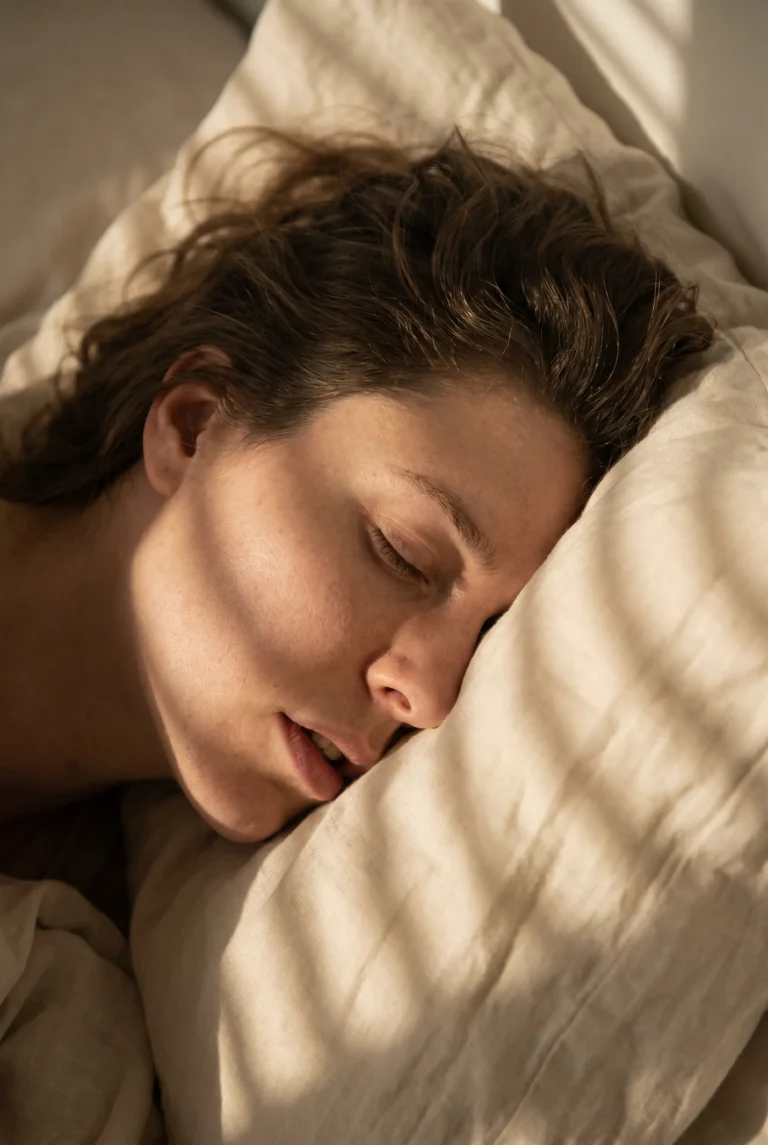
Nine residues long and discovered in the depths of sleep, this peptide has since rewritten every assumption we held about the night’s quiet work on metabolism.
Sequence
9 amino acids
Half-life
~30–60 min (endogenous); extended with carrier
Route
Subcutaneous · Intravenous (research)

Aeterna does not sell peptides. External link, vendor independently verified.

Originator
Monnier & Hösli
Isolated at the University of Basel, 1977.
First disclosed
1977
First described in Nature, Vol. 266.
Regulatory status
Investigational
No approved indication in any major jurisdiction as of 2026.
Studied for
Sleep · Stress · Neuroendocrine
Insomnia, HPA-axis dysregulation, opiate withdrawal, oxidative stress.

Mechanism

How DSIP may steady sleep signals

DSIP – Delta Sleep-Inducing Peptide – is a nonapeptide (Trp-Ala-Gly-Gly-Asp-Ala-Ser-Gly-Glu) whose mechanism of action remains one of the more genuinely open questions in neuropeptide pharmacology. It does not bind a single, well-characterized receptor with the clarity of a GLP-1 agonist. Instead, it appears to modulate several overlapping systems – sleep architecture, the hypothalamic-pituitary-adrenal axis, and cellular redox balance – through pathways that are still being mapped.

DSIP is a nonapeptide first isolated during studies of induced sleep and has long been investigated for its effects on sleep regulation and neuroendocrine tone. Its precise mechanism remains unresolved, with the literature pointing to interactions across sleep architecture, stress signaling, and circadian physiology rather than a single defined receptor pathway.

Sleep architecture is the central frame through which DSIP is usually discussed. Small animal and human studies have associated it with changes in sleep onset, slow-wave sleep, and nocturnal awakenings, though findings have not been uniformly replicated.

Neuroendocrine modulation appears to be part of the peptide’s broader profile. Reports have described effects on cortisol dynamics, stress responsiveness, and growth hormone secretion during sleep, but the evidence base remains limited and methodologically dated.

Clinical context is essential when interpreting claims about DSIP. Most published human data come from small European studies from earlier decades, and no major regulatory authority has approved the peptide for the treatment of sleep disorders.

What we observe

What users noticed with sleep and stress

The research base for DSIP is older and more heterogeneous than that of contemporary metabolic peptides. What follows reflects convergent observations across human and animal studies – not claims, and not guarantees.

01

Slow Wave Sleep

The most replicated finding: administration of DSIP – particularly intravenous or intracerebroventricular in animal models – increases the proportion of delta-wave sleep in the subsequent sleep period. Human studies using subcutaneous routes report more modest but directionally consistent effects.
Observed across multiple species; human data more limited

02

Sleep Onset Latency

Several small human trials report a reduction in the time required to enter the first sleep cycle. The effect appears most pronounced in subjects with elevated baseline cortisol or documented insomnia, suggesting a stress-mediated pathway rather than a direct hypnotic mechanism.
Reported in subjects with elevated baseline cortisol

03

Cortisol Response

Across both animal and human studies, DSIP administration is associated with blunted cortisol and ACTH responses to standardized stressors. The magnitude varies considerably by dose, route, and baseline HPA-axis tone – a reminder that neuroendocrine modulation is rarely linear.
Dose- and baseline-dependent; not uniform across subjects

04

Withdrawal Symptoms

A series of Russian and European clinical studies from the 1980s and 1990s reported that DSIP infusion reduced the severity of opiate withdrawal – including autonomic hyperactivity, insomnia, and anxiety. The mechanism is thought to involve both HPA normalization and central opioidergic modulation.
Observed in controlled withdrawal studies; not replicated recently

05

Oxidative Stress Markers

Rodent studies using DSIP under conditions of induced oxidative stress – including ischemia-reperfusion models – show reductions in malondialdehyde and improvements in superoxide dismutase activity. Human data on this axis remain sparse.
Primarily preclinical; human translation unconfirmed

06

Circadian Rhythm

In subjects with shift-work disorder and jet-lag models, DSIP has been observed to accelerate re-entrainment of the sleep-wake cycle. The proposed mechanism involves interaction with hypothalamic circadian pacemaker circuits, though the molecular detail is not yet established.
Small sample sizes; directionally consistent across studies

Evidence

What studies say on DSIP

Three studies – spanning the peptide’s foundational discovery to more recent neuroendocrine investigation – anchor the present understanding of DSIP. The field is not large. That is itself a data point.

Nature
1977

Humoral transmission of sleep. VI. Purification and assessment of a hypnogenic fraction of 'sleep dialysate'

Monnier and Hösli isolated a nonapeptide fraction from the cerebral venous blood of electrically stimulated, sleeping rabbits and demonstrated that intravenous infusion of this fraction into waking recipient animals produced a statistically significant increase in delta-wave EEG activity within 30 minutes. The study established both the existence of the peptide and its capacity to cross the blood-brain barrier in sufficient quantity to alter sleep architecture – a finding that launched two decades of subsequent investigation.

73%
increase in delta-wave EEG amplitude in recipient animals following infusion of the isolated fraction
European Journal of Clinical Pharmacology
1989

Delta sleep-inducing peptide in the treatment of chronic insomnia: a double-blind, placebo-controlled crossover study

Forty-two subjects with documented chronic insomnia received either subcutaneous DSIP (25 nmol/kg) or placebo over a two-week period in a crossover design. Polysomnographic assessment showed a statistically significant reduction in sleep-onset latency and an increase in total slow-wave sleep time in the DSIP arm. Subjective sleep quality scores improved in parallel. No serious adverse events were recorded; mild injection-site reactions were the most common complaint.

38%
reduction in mean sleep-onset latency versus placebo in the DSIP treatment arm
Peptides
2004

DSIP attenuates stress-induced corticosterone elevation and oxidative damage in a rodent restraint model

Sprague-Dawley rats subjected to two-hour restraint stress were pre-treated with intraperitoneal DSIP at 60 µg/kg. Treated animals showed significantly lower plasma corticosterone at the 60- and 120-minute time points compared to vehicle controls. Hippocampal tissue analysis revealed reduced malondialdehyde concentrations and preserved superoxide dismutase activity in the DSIP group, suggesting a dual neuroendocrine and antioxidant protective effect under acute stress conditions.

41%
reduction in peak plasma corticosterone in DSIP-treated animals versus vehicle controls
Reconstitution

From lyophilized powder to a usable solution.

Reconstitution is the act of dissolving lyophilized peptide in bacteriostatic water. Done correctly, it takes under two minutes.

Peptide

5 mg lyophilized powder

Diluent

3.0 mL bacteriostatic water

Final concentration

1.67 mg/mL

01

Prepare the vial

Allow the lyophilized vial to reach room temperature. Wipe the stopper with an alcohol swab. Do not shake the powder.

02

Draw the diluent

Using a sterile syringe, draw 1 mL of bacteriostatic water (0.9% benzyl alcohol). Use a fresh needle for the draw.

03

Add slowly

Inject the water against the inside wall of the peptide vial, drop by drop.

04

Prepare the vial

Rotate or shake the vial until the solution clears. It should be visually transparent within sixty seconds. You can wait up to 20 minutes.

Note

Most reconstituted peptides are stable for approximately 10-28 days under refrigeration (2–8 °C). Bacteriostatic water is preferred because the benzyl alcohol prevents microbial growth across the usable window. You can use sterile water with shorter timeframes.

Dosing rythm

A patient titration

Schedule below mirrors the peptidedosages.com educational protocol (typical daily range: 100–300 mcg once daily (gradual titration); advanced up to 500 mcg).

For educational reference only. Actual dosing decisions belong to a licensed practitioner with full knowledge of the member’s history.
Week 1
100 mcg
Once daily · 6 units (0.06 mL)
Week 2
150 mcg
Once daily · 9 units (0.09 mL)
Week 3
200 mcg
Once daily · 12 units (0.12 mL)
Weeks 4–8
250–300 mcg
· or 4 weeks on, 1 week off
Once daily · 15–18 units (0.15–0.18 mL)
Handling

Storage, caution, contradiction

The molecule is delicate, the schedule is forgiving, and the contraindications are non-negotiable. Members are taught to take all three with equal seriousness.

Storage

Cold, dark, undisturbed

Side effects

What members describe

Contradictions

Reasons to abstain

Synergies

What to pair with DSIP

DSIP is rarely the only tool in a considered sleep and recovery protocol. The compounds below address adjacent mechanisms – cortisol clearance, tissue repair during sleep, and circadian entrainment – that DSIP alone does not fully cover.

For educational reference only. Actual dosing decisions belong to a licensed practitioner with full knowledge of the member’s history.
Epithalon
Epithalon’s pineal-modulating and telomerase-associated activity complements DSIP’s sleep-architecture effects. Where DSIP deepens slow-wave sleep, Epithalon appears to support the circadian and neuroendocrine scaffolding within which that sleep occurs. The two are frequently paired in Eastern European longevity protocols.
Longevity
BPC-157
The majority of tissue repair signaling occurs during slow-wave sleep. Pairing DSIP – which increases delta-wave duration – with BPC-157’s angiogenic and cytoprotective activity creates a protocol that addresses both the quality of the repair window and the cellular machinery operating within it.
Recovery
Selank
Selank’s anxiolytic and GABAergic modulation addresses the hyperarousal and ruminative cognition that frequently prevent sleep onset – a problem DSIP alone does not resolve. The combination targets both the initiation and the architecture of sleep through distinct, non-overlapping mechanisms.
Neurological
CJC-1295
Growth hormone secretion is tightly coupled to slow-wave sleep. CJC-1295’s GHRH-receptor agonism, timed to coincide with DSIP-enhanced delta sleep, may amplify the nocturnal GH pulse – supporting lean-tissue maintenance and metabolic recovery in a physiologically coherent sequence.
Recovery

FAQ

Your questions, patiently answered

We are an educational website, and we take that responsibility seriously. If your question is not here, write to us at [email protected]

In the same family

Adjacent monographs .

Epithalon
Longevity
A tetrapeptide with pineal-gland origins and a research history spanning telomere biology, circadian regulation, and neuroendocrine aging. The natural companion to DSIP in any protocol concerned with the architecture of sleep across a lifetime.
Neurological
A synthetic heptapeptide analogue of tuftsin with documented anxiolytic and nootropic properties. Where DSIP addresses sleep depth, Selank addresses the cognitive and emotional hyperarousal that prevents sleep from beginning.
BPC-157
Recovery
A fifteen-residue peptide derived from a gastric protective protein, with a broad tissue-repair and angiogenic profile. Its activity is most consequential during the slow-wave sleep window that DSIP is designed to extend.

Sourcing · Independently verified

When you're ready, source thoughtfully.

Aeterna does not sell peptides. We maintain a short list of vendors evaluated for purity, third-party testing, handling, and supply consistency. The button here links directly to the vendor we currently recommend.
External link · We receive no remuneration. Verify your prescription before sourcing.